How To Catch King George whiting
King George Whiting Fishing Guide: How to Catch, Clean & Fillet Whiting
Everything a beginner needs to land one of Victoria's favourite table fish — practical tips on baits, rigs, hooks and locations, plus step-by-step videos for cleaning and filleting.
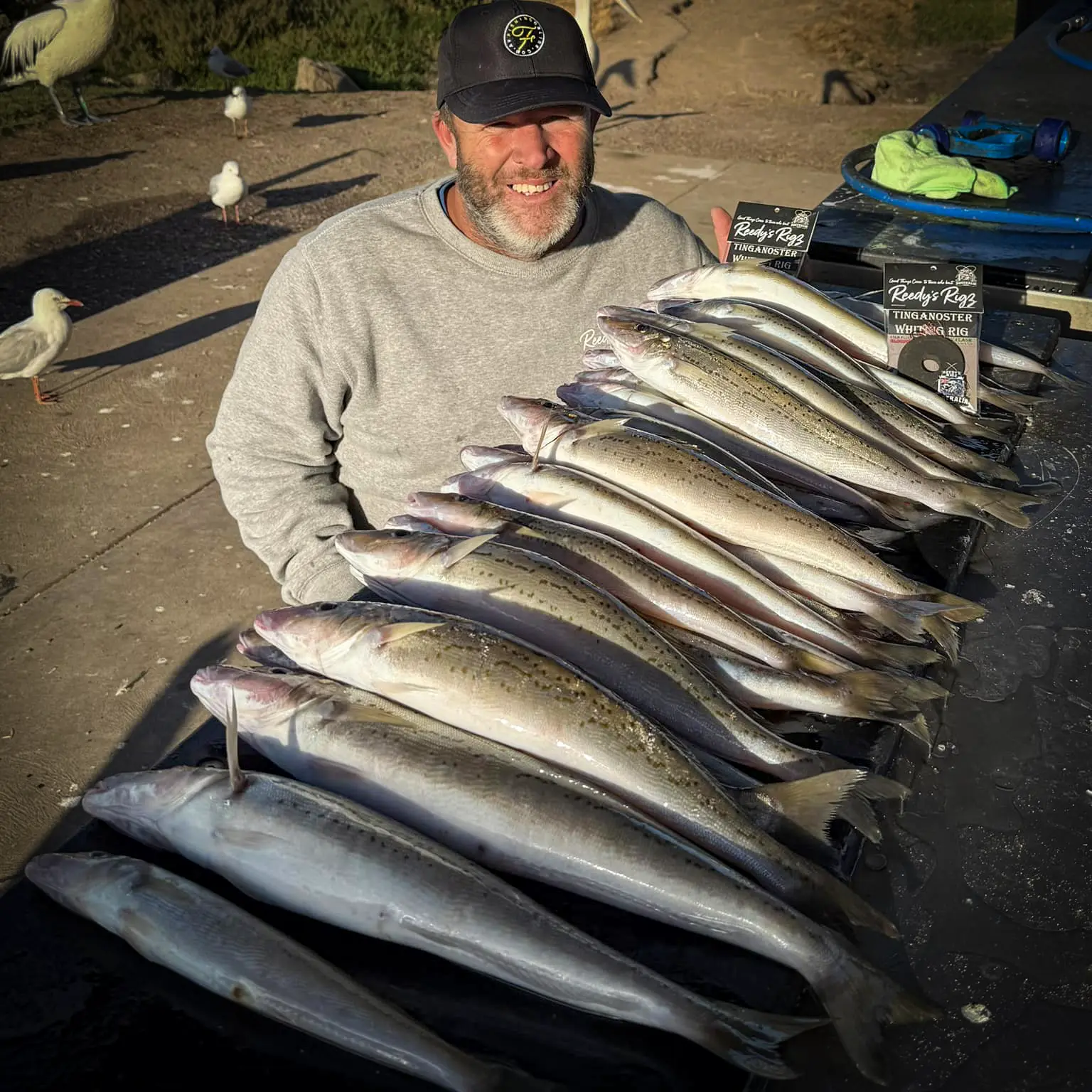
G'day. This page is honestly everything you need to know about catching King George Whiting in Port Phillip Bay and Western Port. I'm lucky enough to fish for a living, so I spend a huge amount of time on the water — and I love passing what I learn on to other anglers.
Fair warning: some of the videos get a bit silly. But the fishing information is fair dinkum. This guide has taken years to film and put together, and it's packed with real on-water experience — videos, tips and hard-earned lessons to help you become a better whiting fisherman.
— Brett, Reedy's Rigs
The King George Whiting is one of Victoria's most loved fish — and for good reason. They're brilliant eating, they're caught right around the state's bays and inlets, and you can target them every month of the year. They're also one of the easiest species for a first-timer to get onto, which makes whiting fishing great for family trips.
This is a complete guide to King George Whiting fishing. We'll cover where to find them, the baits, rigs and hooks worth trying, how to fish for them in shallow and deep water, and how to clean, fillet and skin your catch. Short videos are spread throughout so you can watch and read at your own pace.
One thing worth saying up front: fishing is situational. What works can change from day to day with the conditions, the location and the fish themselves. Different anglers swear by different baits, hooks and rigs — and confidence in your own setup matters as much as the gear itself. Treat this as a guide and a starting point, not a set of hard rules.
Quick Answer
- Baits that work well: fresh squid (calamari), pipis and mussels.
- A rig I rely on: the Reedy's Tinganoster® (one of several effective options).
- Common hook sizes: size 6 long-shank, or circle hooks for hands-off fishing.
- Depth to focus on: 2–8 m over weed and sand; deeper channels in winter.
- Tide to target: a few hours either side of the tide change.
- Legal size (VIC): 27 cm, bag limit 20.
Section 1Why King George Whiting Are So Popular
Ask any Victorian angler about their favourite fish to eat, and King George Whiting are near the top of the list. The fillets are sweet, white and mild, which makes them a hit even with people who don't usually like seafood.
They're also a fantastic family-friendly fish. You don't need a fast boat or expensive gear — a small tinnie, a light rod and a packet of fresh bait will get the kids onto fish. Bites come often enough to keep everyone interested, and the fish are an easy size to handle.
Better still, King George Whiting can be caught all year round in Victoria. They move with the seasons, but they're always somewhere within reach. That mix of great eating, easy access and year-round availability is exactly why they're so popular with beginners and seasoned anglers alike.
▶ How to Catch King George Whiting
A complete on-water walk-through — from finding fish to getting them in the boat.
- Where whiting hold over weed and sand
- Setting up and baiting the rig
- How to read a light whiting bite
- Keeping bait fresh for more hook-ups
Gear used: Reedy's Tinganoster® Whiting Rig.
A quick note on the species: the King George Whiting (Sillaginodes punctatus), sometimes called the spotted whiting, lives over sand and seagrass in sheltered bays. It's the largest of the whiting family — fish can reach around 70 cm — though most you'll catch in the bays are a tidy pan size.
Section 2Where to Find King George Whiting
Finding whiting is half the battle. They live over particular ground, so once you know what to look for, you'll catch them far more consistently.
Shallow weed beds and sand patches
The classic whiting ground is a mix of seagrass (weed) and clean sand in 2–6 m. Whiting cruise the edges where weed meets sand, hunting worms, small shellfish and crabs. Broken weed with sandy holes through it is a prime spot.
Reef edges and deep channels
Whiting also feed along low reef edges and in the deeper channels that run through the bays. Bigger "donkey" whiting often come from this deeper ground, which is why deep-water tactics (Section 7) matter so much later in the year.
Seasonal movements
Whiting follow water temperature. In the warmer months they push onto the shallow weed beds to feed. As the water cools through autumn and winter, many fish drop back into the deeper channels.
▶ Finding King George Whiting Grounds
How to read the water and locate productive whiting ground in the bays.
- What weed and sand edges look like on the sounder
- Why fish move shallow or deep with the seasons
- Anchoring up-current of the school
- Using berley to hold fish behind the boat
Plan your session with our Live Fishing Window for Port Phillip Bay & Western Port.
Top Victorian whiting spots
| Location | Where to fish | Good for |
|---|---|---|
| Port Phillip Bay | Clifton Springs, St Leonards, Mornington, Werribee, Mud Islands | Reliable bay whiting, shallow weed |
| Western Port | Flinders, Tortoise Head, Middle Spit, Cat Bay | Quality fish on the run of tide |
| Corner Inlet | Around Port Welshpool | Famous for big whiting |
| Swan Bay / Queenscliff | Weed flats inside the heads | Shallow-water sport on light gear |
Whiting fire up on the right barometer and tide. Use our Live Fishing Window for Port Phillip Bay & Western Port to plan your session before you launch.
Section 3Baits That Work Well for King George Whiting
Whiting have small mouths and a keen sense of smell, so soft, fresh, juicy baits tend to do well. Different baits can shine on different days, so it pays to carry a couple of options. Here are the ones we come back to most.
| Bait | Why it works | Tip |
|---|---|---|
| Squid (calamari) | Tough, scent-rich, catches bigger fish | Cut small cubes for great hook exposure |
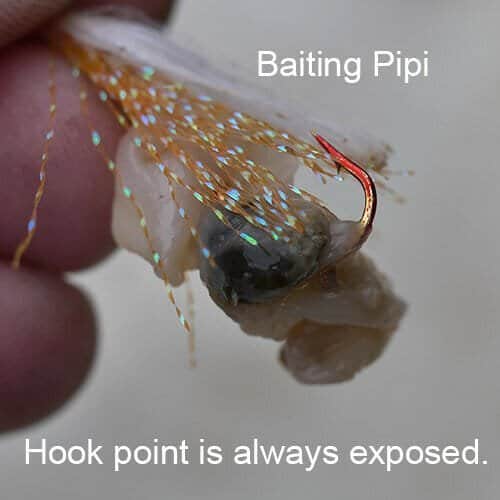
| Pipis | Soft and juicy, fires up a school fast | Re-bait often, they strip easily |
| Mussels | Strong scent trail | Bind to the hook with bait elastic |
| Bass yabbies / worms | Premium for spooky, clear-water fish | Thread on neatly along the shank |
Fresh bait almost always out-fishes frozen. Freezing breaks down the flesh and washes out the scent and oils whiting home in on. A combo of fresh squid and pipi on the same hook is a classic whiting trick.
Section 4Rigs for King George Whiting
Your rig choice makes a real difference to how many whiting you catch — and different rigs suit different anglers. A pre-tied rig also saves you fiddling with knots on the water. Here's the rig I personally fish most, plus the classic alternative.
The Tinganoster® rig — the one I reach for
The Tinganoster® is Reedy's own trademarked King George Whiting rig, designed by Brett Reed and tested over many seasons in Port Phillip Bay and Western Port. It combines elements of a paternoster and a running rig, so the bait sits naturally near the bottom where whiting feed while still moving freely enough to trigger bites. It's one of several effective options — but it's the setup I keep coming back to.

Reedy's Tinganoster® Whiting Rig
Pre-tied on 15 lb fluorocarbon with a single long-shank hook, a scallop UV flasher and a lead clip for fast sinker changes. Just clip on a sinker, bait up and fish.
View the Tinganoster Rig »The Tinganoster comes in UV colours tuned to your bait: orange & white for pipi/cockle, yellow & white for bass yabby, red & white for bloodworm, and pink & white for live prawn. Match the colour to your bait for even more bites.
The Tinganoster carries a single hook on purpose, and in the shallows that's an advantage, not a compromise. When whiting come through in bursts, two hooks just slow you down — you're forever re-baiting both while a school sits right under the boat. Double-headers are rare anyway, and the way this rig fishes you'll hook up on nearly every cast when they're on. One hook keeps you productive: same time to get a bait in the water, more fish on the deck. I fished two hooks for years before I made the switch. The only time a second hook earns its keep is out past about 15 m — but most of my whiting come from just 2–4 m.
The paternoster rig
The paternoster rig is the classic whiting rig, and plenty of anglers still rely on it. It runs one or two short hook droppers above a sinker on the bottom, keeping baits just off the sand. It's simple, reliable and well worth having in the kit — it comes down to what you have confidence in.

Sinkers and leader
Sinkers: use the lightest sinker that holds the bottom. Clip a small ball or bean sinker to the Tinganoster's lead clip in the shallows, and a heavier one in deep water or stronger current.
Leader: the Tinganoster is tied on 15 lb fluorocarbon — strong, nearly invisible and tough enough for the odd reef snag. Run a light 2–4 kg mainline or braid for bite detection. We cover hooks in detail next.
Grab pre-tied Tinganoster® Whiting Rigs ready to fish, available in a handy 10-pack. Prefer to tie your own? Stock up on whiting hooks.
Section 5Hook Styles for King George Whiting
Every angler has a hook they favour, and different hooks suit different styles of fishing. At Reedy's Rigs we offer three hook styles on our pre-tied Tinganoster rigs, and all of them catch plenty of fish. The one that suits you comes down to how you like to fish.
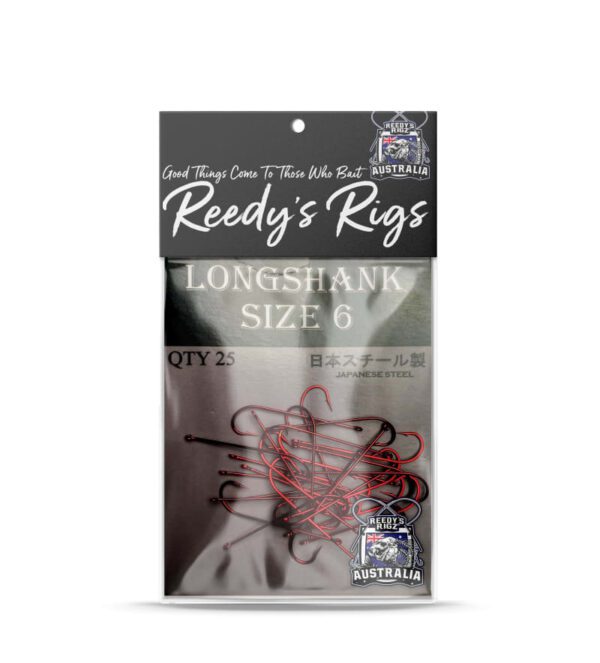
Long Shank Hooks
Easy to bait and unhook, with reliable hook-ups. The style I reach for most.
View Long Shank »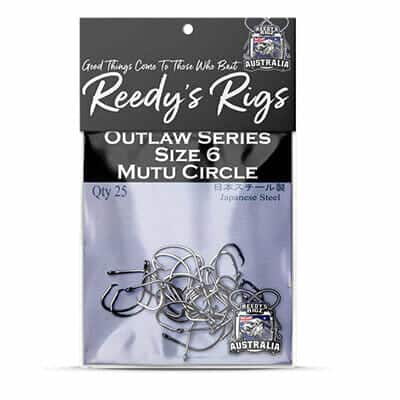
Mutu Circle Hooks
Self-setting circle hooks for hands-off fishing with the rod in the holder.
View Mutu Hooks »
Whiting Whisperer (Wide Gap)
Thin-gauge Japanese steel that many anglers like for fine bait presentation.
View Whiting Whisperer »Long shank hooks
Personally, when I'm targeting King George Whiting, I almost always fish a long shank hook on a Tinganoster rig. It's a simple setup that has consistently produced fish for me over the years. The long shank makes baiting easy and hook removal quick, while still giving excellent hook-up rates — even with the rod sitting in the holder.
Circle hooks (Mutu)
Circle hooks have become hugely popular with anglers who like to leave the rod in the holder and let the fish load it up naturally. Used correctly, they produce great hook-up rates and often set themselves as the fish moves off with the bait. A great option for a relaxed style of fishing.
Whiting Whisperer hooks
Our thin-gauge Whiting Whisperer wide-gap hooks have built a strong following among dedicated whiting anglers. The lighter wire gives excellent bait presentation and penetration, while still holding plenty of strength for King George Whiting and other species like bream, mullet and garfish.
| Hook | Suited to | Why |
|---|---|---|
| Long shank | All-round, holding the rod | Easy baiting and unhooking |
| Circle (Mutu) | Rod-in-holder fishing | Self-sets, fewer deep-hooked fish |
| Whiting Whisperer | Spooky, clear-water fish | Fine wire, superb presentation |
Size 6 is a popular all-round choice for King George Whiting. Many anglers drop to a size 8 for smaller fish, or step up to a size 4 for the bigger winter models.
Why I fish the Tinganoster like a lure
For me, the Tinganoster is more than just a rig — it behaves almost like a lure. Rather than leaving it sitting still on the bottom, I'll slowly retrieve it between bait checks. As the sinker moves across the seabed it creates small hops and lifts that attract nearby fish. I also prefer small squid cubes over strips — they give better hook exposure and consistently produce strong hook-ups.
The UV flashers built into the Tinganoster can make a real difference, especially on bright days when UV levels are high. The extra flash helps fish find the bait faster, often meaning quicker bites.
Section 6How to Fish for King George Whiting
Here's the whole process from start to finish. Follow these steps and you'll be catching whiting in no time.
- Choose your location Find weed and sand in 2–8 m on your sounder, or start at one of the known grounds above.
- Position the boat Set up so your baits sit on good ground and your berley trails back over it.
- Anchor up Anchor up-current so the boat sits still and your lines stream away cleanly behind you.
- Present the bait Thread soft bait neatly so it sits straight, or use small squid cubes. Re-bait often.
- Detect the bite Whiting bites are light taps. Hold the rod, watch the tip and feel for the nibble.
- Hook the fish Don't strike hard. Wait for the rod to load up, then lift smoothly to set the hook.
- Land the fish Keep steady pressure and slide them aboard. A small net helps with the better fish.
Don't strike at the first tiny tap — you'll pull the bait away. Don't let bait go stale; whiting want it fresh. And a small berley trail of mashed bait or pellets will pull a school in right behind the boat.
▶ Whiting Tips & Tackle in Action
Bait presentation, working the rig and timing the bite — on the water.
- Bait presentation that actually gets bites
- Working the Tinganoster slowly, like a lure
- When to wait and when to lift on a bite
- Why light tackle gives you better feel
Get the setup: Reedy's Whiting Rigs & hooks.

Fishing the shallows
In clear, shallow water whiting can be spooky. Anchor well back, keep noise down, lengthen your trace and let the rig drift naturally with the current. A long, light cast away from the boat will get you more bites in skinny water.
Section 7Fishing Deep Water & Slow Tides
As the water cools, many whiting drop into the deeper channels — often 8–20 m down. Catching them there takes a few adjustments.
Fish the slow tides
Deep water and fast current don't mix. The bite usually fires on the slower tides and around the tide change, when you can hold the bottom without piling on lead. Slowly working the rig along the seabed tempts fish when there's little flow.
Boat control and sinkers
In deep channels you need a heavier sinker to keep your bait down and feel the bites. Anchor accurately so you sit right over the fish, and watch your sounder — schools often hold tight to the bottom along the channel edges.
Through the cooler months the shallow weed beds lose warmth and food, so whiting follow more stable temperatures into the deeper channels. Knowing this keeps you on fish when the shallows go quiet.
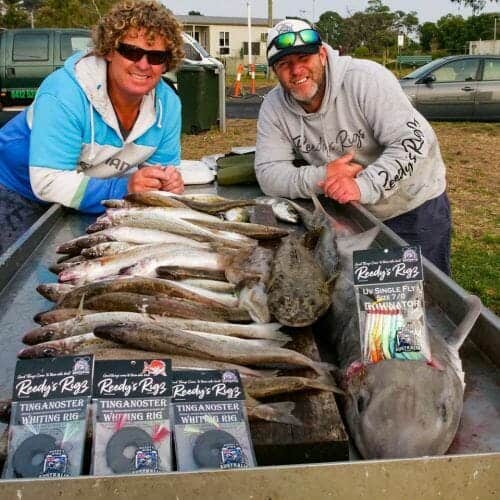
Section 8Cleaning, Filleting & Skinning King George Whiting
The reward for all that fishing is a feed of fresh whiting. Here's how to turn your catch into clean, boneless fillets.
- Clean the fish Rinse in clean water. No need to scale them if you're going to skin the fillets — the usual approach with whiting.
- Fillet Cut in behind the gill to the backbone, then run a sharp, flexible knife along the spine from head to tail, riding over the rib bones. Flip and repeat.
- Skin the fillet Lay it skin-side down, hold the tail, slide the knife between flesh and skin at a shallow angle and push forward to peel the skin off.
- Remove the rib bones Trim the thin strip of rib bones along the belly edge. You're left with a clean, boneless fillet.
▶ How to Fillet & Skin King George Whiting
Turn your catch into clean, boneless fillets — follow along step by step.
- Cutting clean fillets along the backbone
- Skinning the fillet in one smooth motion
- Trimming out the thin rib bones
- Why a sharp, flexible knife matters
Browse the full Reedy's Rigs tackle range to gear up for your next trip.
A sharp, flexible filleting knife makes all the difference. A blunt blade tears the soft flesh and wastes meat. Wipe the blade clean between fish for the neatest fillets.
Section 9King George Whiting Size & Bag Limits (Victoria)
Knowing the rules keeps the fishery healthy and keeps you out of trouble. In Victoria, the minimum legal size for King George Whiting is 27 cm, and the daily bag limit is 20 per person. Fish must be landed whole or in carcass form so they can be measured.
Fishing rules change from time to time and differ between states. Before you head out, confirm the latest size and bag limits with the Victorian Fisheries Authority. You only need to keep what you'll eat.
Section 10Common Mistakes When Whiting Fishing
Most quiet days come down to a handful of avoidable errors. Tick these off and your catch rate will climb.
- Too much sinker weight. Heavy lead spooks fish and kills your feel for the bite. Go as light as conditions allow.
- Poor bait presentation. A messy, bunched-up bait gets ignored. Thread it neatly or use squid cubes.
- Fishing the wrong tide. Whiting feed on moving water. A dead, slack tide usually means a slow bite.
- Not checking bait regularly. Stale or stripped baits catch nothing. Wind in and refresh often.
- Using oversized hooks. Big hooks don't suit a whiting's small mouth. Stick to size 6–8.
Section 11Frequently Asked Questions
Bait, Rigs & Hooks
What baits work well for King George Whiting?
Fresh squid (calamari), pipis and mussels are all reliable. Bass yabbies and worms can be great for spooky fish in clear water. Different baits work on different days, and fresh bait usually out-fishes frozen.
What rigs are commonly used for King George Whiting?
The paternoster is the classic, and Reedy's Tinganoster® is the one I personally fish most — it blends a paternoster and running rig with a single long-shank hook, a UV flasher and a lead clip on 15 lb fluorocarbon. In the shallows one hook keeps you more productive; it's one of several effective options, so fish what you have confidence in.
What hook size is commonly used for King George Whiting?
Size 6 is a popular all-round choice. Many anglers drop to a size 8 for smaller fish, or step up to a size 4 for bigger winter whiting.
Long shank or circle hooks — what's the difference?
Long shank hooks are easy to bait and unhook and still hook fish well. Circle hooks suit a hands-off, rod-in-holder style and often set themselves. Both catch plenty — it comes down to preference.
What line should I use for King George Whiting?
Light tackle works well — around 2–4 kg mainline or light braid for bite detection, with a 15 lb (or lighter) fluorocarbon leader.
Should I use fresh or frozen bait?
Fresh tends to do better, as freezing washes out the scent and oils whiting key on. Frozen still catches fish, but fresh squid, pipi or worm usually has the edge.
How do you keep bait on the hook?
Thread soft baits neatly along a long-shank hook so they sit straight, or use small squid cubes for better hook exposure. Re-bait often.
Locations, Tides & Seasons
Where can I catch King George Whiting in Port Phillip Bay?
Try the weed beds off Clifton Springs, St Leonards, Mornington, Werribee and the Mud Islands. Look for weed and sand in 2–8 m.
Where can I catch King George Whiting in Western Port?
Try the banks and channel edges around Flinders, Tortoise Head, Middle Spit and Cat Bay. Fish the run of tide over weed and broken ground.
What depth should I fish for King George Whiting?
In the warmer months, 2–8 m over weed and sand. As the water cools, the deeper channels from around 8–20 m on the slower tides are worth trying.
What tide should I fish for whiting?
Whiting tend to bite on moving water, generally a few hours either side of the tide change. A dead, slack tide often slows things down.
How do you fish slow tides for whiting?
Use the lightest sinker that holds bottom, keep a steady berley trail, and slowly work the rig along the seabed between bait checks.
Can you catch King George Whiting all year round?
Yes. They feed on shallow weed beds in the warmer months and move into deeper channels as the water cools, so they're catchable year-round in Victoria.
What time of year is good for whiting in Victoria?
You can catch them all year, with quality winter fish in both bays. Early morning, late afternoon and the hours around a tide change tend to fish well.
Deep Water & Access
How do I catch whiting in deep water?
Fish the slower tides so you can hold bottom with less lead, anchor accurately over fish you mark on the sounder, and keep baits fresh. Deep channel edges hold the better fish in the cooler months.
Do I need a boat to catch King George Whiting?
No. A boat opens up more ground, but you can catch them from many Victorian piers, jetties and beaches near weed and sand.
Can you catch whiting from a jetty or pier?
Yes. Cast near weed beds and sandy patches, use fresh bait and light gear, fish the tide change, and add a little berley to draw fish in.
Why am I not catching whiting?
Usually too much sinker weight, stale or poorly presented bait, a dead tide, or oversized hooks. Fish light, keep bait fresh, and target moving water.
Rules, Cleaning & Eating
What is the legal size and bag limit in Victoria?
The minimum legal size is 27 cm and the daily bag limit is 20 per person. Always check the Victorian Fisheries Authority for current rules.
How do you clean King George Whiting?
Rinse in clean water. If you'll skin the fillets you don't need to scale them. Keep your catch cold and clean it as soon as you can so it's at its freshest.
How do you fillet King George Whiting?
Cut in behind the gill to the backbone, then run a sharp flexible knife along the spine from head to tail, riding over the rib bones. Flip and repeat.
How do you skin a whiting fillet?
Lay it skin-side down, hold the tail, slide the knife between flesh and skin at a shallow angle, and push forward to peel the skin away.
Do King George Whiting have many bones?
No, they're a clean fish. Remove the thin strip of rib bones along the belly edge and you're left with boneless flesh.
Are King George Whiting good to eat?
They're widely regarded as excellent eating in Australia — sweet, white and mild, and easy to cook for the whole family.
What's a good way to cook whiting?
Keep it simple. Lightly flour and pan-fry in butter, or crumb and shallow-fry, cooking briefly over medium-high heat so the sweet flesh stays moist.
King George vs sand whiting — what's the difference?
King George Whiting are larger, found across southern Australia, and carry distinctive brown spots. Sand whiting are more common on the east coast and are generally smaller and plainer.
How big do King George Whiting get?
Most bay fish are pan-sized, but they can reach around 70 cm and several kilos, with bigger fish often from deeper coastal water.
Fishing Is Full of Opinions
One thing I've learnt over the years is that fishing is full of opinions. You'll hear people talk about the best hook, the best bait, the best rig or the best technique. The reality is that what works well for one angler might not be what another prefers.
I've seen days where squid out-fished everything. I've seen days where pipis were hard to beat. And I've seen anglers catch plenty of whiting on long shanks, circle hooks and wide-gap hooks alike. The longer you fish, the more you realise there are very few absolutes.
At Reedy's Rigs, we've built our products around what has worked consistently for us over many years on the water. They're the hooks and rigs we trust and use ourselves. That doesn't mean they're the only way to catch fish, and it doesn't mean every angler will have the same opinion.
Rather than make big claims, I'd rather show you the techniques, the videos and the results, then let you decide what works for you. Fishing should be about learning, experimenting and building confidence in your own approach.
— Brett, Reedy's Rigs
Get Out ThereReady to Catch a Feed?
King George Whiting are a great fish to chase in Victoria — fine eating, available all year and beginner-friendly. Pick your weed-and-sand ground, fish a rig you have confidence in on a moving tide, and you'll be filleting a feed before you know it.
Shop Tinganoster Rigs Shop Whiting Hooks